
19 October 2026
Salamatul Hifdiyah: Unlocking the Potential of the ‘Tree of Life’ for Sustainable Development
Growing up in a village in Pasuruan Regency, East Java, where early marriage was common, Salamatul &... Read more

The Australia Awards are prestigious, transformational scholarships and short courses offered to emerging leaders for study, research and professional development in Australia
19 October 2026
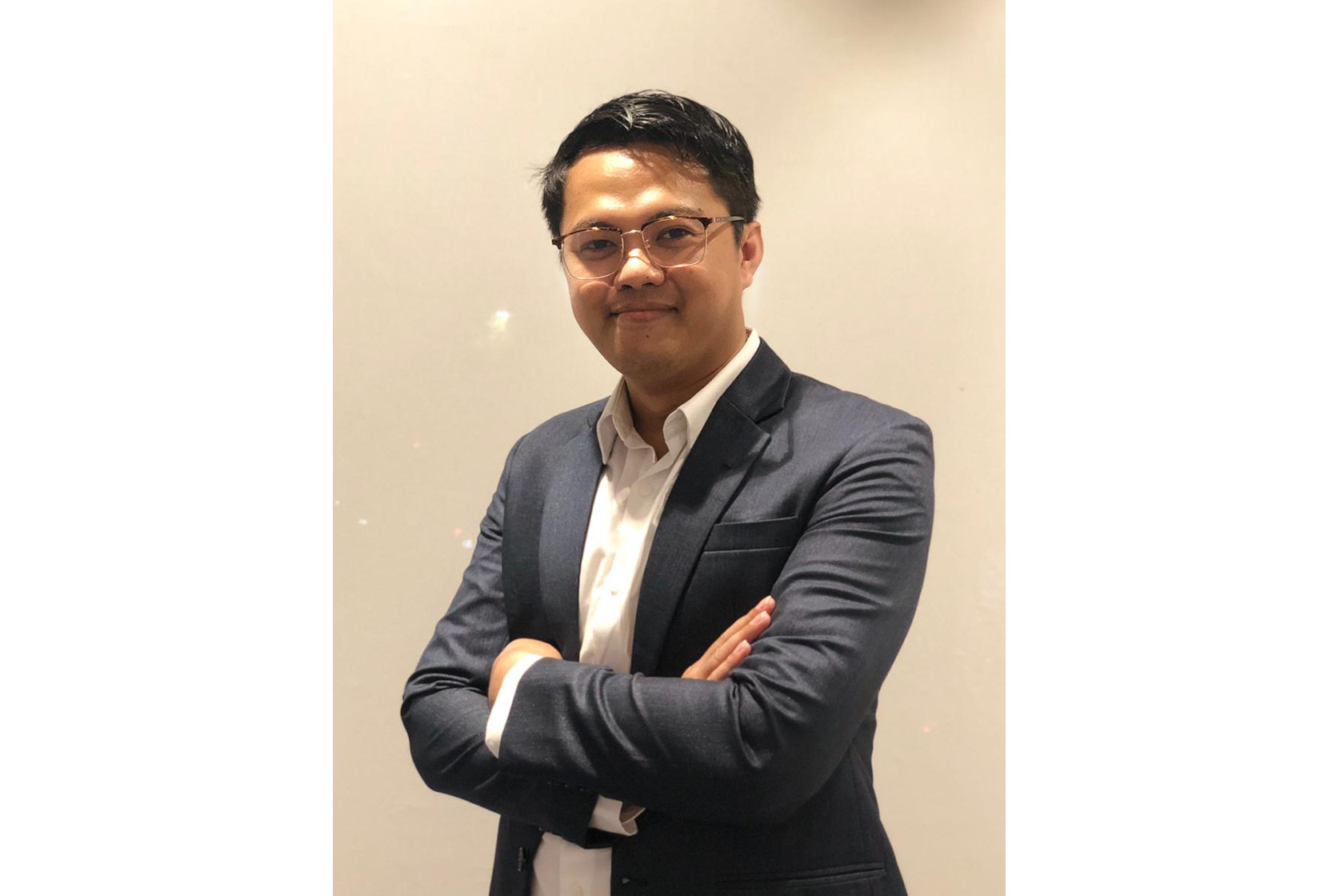
 From Research to Real-World Impact: Miftahur Rizqi Akbar’s Work with Indonesian Farmers
How can research make a real difference to farmers’ lives? For Miftahur Rizqi Akbar, the answer begins with listening.
As a researcher at the Indonesian Coffee and Cocoa Research Institute (ICCRI), Rizqi works to bridge the gap between scientific research and the everyday realities of Indonesian farmers. He believes that improving agriculture requires not only new technologies and better farming practices but also an understanding of the people who depend on the sector for their livelihoods.
His perspective was shaped in part by an Australia Awards Short Course on Sustainable Agri-Food Systems at Adelaide University in 2022. The experience introduced him to different approaches to agricultural development and encouraged him to consider how international insights could be adapted to Indonesia’s unique challenges
For Rizqi, the goal is clear: help Indonesian farmers unlock their businesses potential and contribute to a more productive, sustainable agricultural sector.
Seeing the Potential of Indonesian Agriculture
Despite Indonesia’s abundant natural resources and long agricultural tradition, farming is not always seen as an attractive career path, particularly by younger generations.
Rizqi has witnessed this perception throughout his career and believes it needs to change.
‘Right now, agriculture tends to be seen as tiring work, where people think you have to get muddy,’ he said.
His interest in addressing this challenge grew during his studies at Institut Pertanian Bogor (IPB) and continued to develop through his career in agricultural research. At ICCRI, he saw opportunities to make farming more productive and commercially viable by combining scientific knowledge with practical experience.
Technological advances, including artificial intelligence (AI), offer new possibilities for improving agricultural practices and decision-making. However, Rizqi believes that technology alone cannot solve the sector’s challenges. Innovation must be relevant to farmers’ needs and suited to the conditions in which they operate.
As a researcher, he sees considerable potential to help farmers improve the quality of their products, strengthen their businesses and access higher-value markets. Realising that potential requires a willingness to learn from different agricultural systems and identify approaches that can work in Indonesia.
Learning Beyond Borders
Seeking new perspectives, Rizqi joined the Australia Awards Short Course at Adelaide University in 2022. For him, studying in Australia was an opportunity to examine familiar challenges from a different perspective and learn how agricultural systems operate in another country.
One difference that stood out was the scale of agricultural operations, particularly in coffee production.
‘In Indonesia, when it comes to coffee, 96% of coffee production comes from smallholder farmers. So, most of it is scattered. Meanwhile, in Australia, one person can own tens of hectares of land,’ he said.
The fragmented nature of smallholder farming in Indonesia can make it difficult to coordinate production, maintain consistent quality and meet market requirements. Rizqi recognised that addressing these challenges would require stronger cooperation among farmers, alongside approaches suited to Indonesia’s local context.
He was also impressed by Australia’s agribusiness models, including family-owned businesses with an export focus. He observed how agricultural businesses could engage with local government through dedicated forums, providing opportunities to communicate concerns and discuss industry needs.
Another important lesson was the role of product standards in maintaining quality and meeting market expectations.
‘So, there are standard references that every product has. You could say Australia has a lot of labels, but those standards aren't just a formality; they're tools used for quality control,’ he said.
These observations helped Rizqi see how better coordination, consistent quality standards and stronger business networks could create opportunities for Indonesia’s farmers.
Rather than simply replicating the Australian model, he began considering how its underlying principles could be adapted to Indonesia’s agricultural landscape.
Putting Farmers at the Centre of Research
Back at ICCRI, Rizqi applies these insights in his role as Head of Training and Services.. He leads training activities in coffee and cocoa and helps translate research findings into practical knowledge for farmers.
A key part of this role is making scientific information accessible. Researchers must explain technical findings in ways relevant to farmers’ experiences while also addressing misinformation and concerns about new approaches.
‘We don't talk down to farmers, because the knowledge comes from the farmers, not the researchers. The knowledge comes from them; they got it from their ancestors and have done it repeatedly. We researchers are just blending it,’ he said.
This philosophy shapes how Rizqi builds relationships with farming communities. Rather than imposing solutions, he listens to farmers’ concerns, considers their feedback and works with them to identify practical ways forward.
He also recognises that introducing change requires patience. New practices are more likely to gain acceptance when farmers understand their value and can see how they fit into existing conditions.
‘So, we can't force things, and we try a little at a time, not extreme changes, because what matters is that the message gets across,’ he said.
By treating farmers as partners rather than passive recipients of research, Rizqi aims to build trust and encourage collaboration. Their concerns serve as a starting point for investigation, helping researchers develop solutions grounded in real-world experience.
A Commitment to Continuous Learning
Behind his efforts to develop the agricultural sector, Rizqi sees personal and professional development as an ongoing responsibility, particularly in a field where technology, market demands and agricultural practices continue to evolve.
While formal education provides a structured pathway for learning, he found that professional life required him to take greater initiative. He wanted to keep challenging himself, explore unfamiliar ideas and find new ways to contribute through his work. That motivation led him to the Australia Awards Short Course.
‘I joined the Australia Awards Short Course because I felt I had to grow; I needed exposure to a new world. Australia was my first time abroad. After getting that exposure, I became even more motivated to keep developing,’ he said.
The experience broadened his understanding of agricultural development and encouraged him to look beyond technical research when considering the sector’s future.
For Rizqi, research is not measured solely by the technologies it produces or the knowledge it generates. Its value also lies in how effectively that knowledge improves farmers’ livelihoods and creates opportunities for their businesses to grow.
Working Towards a More Sustainable Agricultural Sector
Although collaboration between researchers and farmers is essential, Rizqi believes lasting progress also depends on coordinated government policies and support across the agricultural value chain.
‘In terms of programs, the government's programs are already very good. They just need integration. Sometimes what we face in the field is data that is out of sync,’ he said.
He identifies fragmented data and limited continuity between programs as challenges that can prevent initiatives from delivering lasting results. Agricultural development requires coordinated support across regulations, production inputs, infrastructure and market access..
Rizqi hopes to see closer coordination between government, research institutions, industry and farming communities. He believes that combining effective policies with appropriate technology, stronger cooperation and better market access will help farmers turn their potential into tangible economic benefits.
Ultimately, his ambition is to help build an agricultural sector in which Indonesian farmers are recognised not only for their hard work, but also for their knowledge, innovation and entrepreneurial potential.


Share this news on:
Related News