
15 May 2026
Irfan Murtadho Agtyaputra: Championing Responsible AI and Digital Governance
Irfan Murtadho Agtyaputra’s interest in information technology began in primary school, when p... Read more

The Australia Awards are prestigious, transformational scholarships and short courses offered to emerging leaders for study, research and professional development in Australia

15 May 2026
 Betty Herlina: Amplifying Voices, Challenging Misinformation
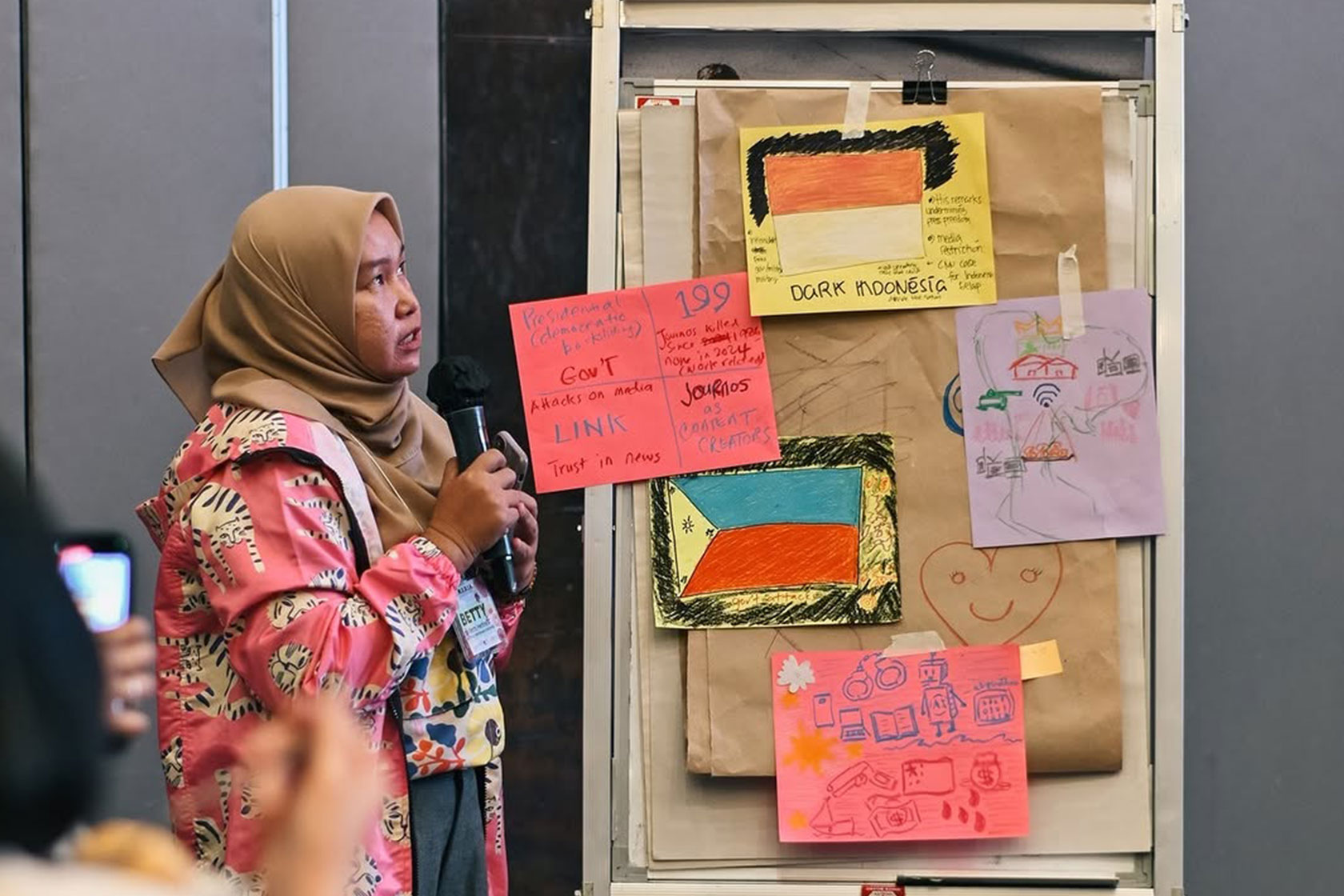
The power of journalism to amplify unheard voices first drew Betty Herlina to the profession during her university days. More than a decade into her career, she began to recognise a persistent gap: women’s voices remain underrepresented in Indonesia’s media landscape.
This realisation prompted Betty to establish Bincang Perempuan, an online media platform grounded in a gender perspective. Through this initiative, she explores social, health and political issues affecting women and youth, while also creating opportunities for emerging female journalists to develop their skills.
Based in Bengkulu, Betty has witnessed firsthand the structural limitations women face in journalism, particularly outside major urban centres. Rather than accepting these constraints, she built a collaborative platform that now brings together a network of women journalists as regular contributors. The platform also hosts university students through internships, offering practical exposure to reporting, research and storytelling.
‘I feel I’ll fall behind if I stop learning and improving my own capabilities,’ said Betty, describing her motivation for joining the Australia Awards Short Course on the Challenge of Misinformation & Disinformation: Fostering Information Integrity & Media Literacy in Democratic Societies, delivered by Queensland University of Technology (QUT) in 2024.
The program aligned closely with her work as a fact-checker with the Asian American Journalist Association (AAJA) Asia Chapter and the Alliance of Independent Journalists (AJI), where she actively contributes to combating false and misleading information.
Building Critical Thinking to Counter Misinformation
A central focus of Betty’s learning during the Short Course was understanding how different societies address misinformation and disinformation systematically.
‘In Indonesia, even though we as journalists have carried out pre-bunking and debunking, most people still believe the first piece of misinformation they receive,’ she explained.
In contrast, she observed that Australia places strong emphasis on cultivating critical thinking from an early age. This foundational skill enables individuals to question information sources, assess credibility and consider broader implications, capabilities that are essential in today’s complex information environment.
During the program, Betty was challenged to analyse information from multiple perspectives. Participants were encouraged to interrogate content by asking who created it, what motivations might be behind it, what impact it could have and who might be affected.
This structured analytical approach has since become integral to her work. It has strengthened her ability to navigate ambiguity, assess competing narratives and make informed editorial decisions, particularly in high-stakes contexts where misinformation can have tangible social consequences.
Empowering Youth Through Digital Literacy
Drawing on these insights, Betty believes that long-term solutions must begin with education, specifically by nurturing literacy and critical thinking habits from an early age.
‘I noticed that from children to older adults in Australia, people have a very strong reading habit. Because of that, they’re less likely to be misled when they come across misinformation or disinformation,’ said Betty.
For her Award Project, Betty collaborated with peers from Information and Communication Technology (ICT) Watch and the Indonesia and Southeast Asia Freedom of Expression Network (SAFEnet). Together, they delivered a workshop titled Diligent Digital Literacy Agent to 70 students at SMAIT Iqro in Bengkulu City.
The initiative brought together multidisciplinary expertise and demonstrated the value of collaboration in addressing complex societal changes. It also featured a virtual session by QUT journalism expert Angela Romano, who introduced students to the concept of digital literacy agents.
‘These teenagers are digital natives, but at the same time, they’re also vulnerable to misinformation and disinformation due to the fear of missing out. Raising awareness among young people is also easier because they tend to have fewer biases toward particular groups,’ Betty explained.
Following the Short Course, Betty expanded these efforts through Bincang Perempuan, delivering digital literacy training for students, university audiences and fellow journalists. As of 2025, Bincang Perempuan has conducted multiple training sessions, reaching dozens of participants.
Applying Learning to Investigative Journalism
The impact of the Short Course has also extended Betty’s investigative work. In 2025, she began developing a collaborative investigation into online gambling, working with several Indonesian media outlets.
‘Critical thinking helps us analyse the issue more holistically, especially regarding the widespread online gambling promotion content on social media,’ said Betty.
This project requires not only technical research skills but also strategic thinking, an understanding of how digital ecosystems operate, how narratives are constructed, and how power dynamics influence information flows.
Her ability to integrate these dimensions reflects a growing capacity to approach journalism as both a technical and strategic discipline, rather than purely a reporting function.
Strengthening Leadership Through International Engagement
Betty’s professional development has also continued to expand through her engagement with the Australian Broadcasting Corporation International Development (ABCID).
Her involvement began in 2023 with a campaign addressing gender-based violence, followed by participation in a digital storytelling workshop in 2024. In 2025, Betty attended a leadership training program at the University of New South Wales (UNSW).
‘The leadership training by ABCID encouraged us, as media leaders, to reflect on our leadership styles. We also learned about human resource management, financial management for media organisations, and how to make decisions based on financial reports,’ said Betty.
These experiences have strengthened her capacity as a leader, enhancing her ability to manage resources, guide teams and make informed decisions under pressure. More importantly, she admitted they also shaped her interpersonal approach toward her team.
Exploring the Role of AI in Journalism
Looking ahead, Betty is exploring how emerging technologies can support more effective responses to misinformation.
She is currently developing an AI-based tool to help journalists identify and address misinformation through a gender-sensitive lens. This is particularly relevant in the context of Sexual and Reproductive Health and Rights (SRHR), where misinformation and disinformation can have serious and disproportionate impacts on women.
‘During the Short Course, I saw how coding skills were used to support journalism work, particularly in mining election-related data from social media. Seeing that, I realised that journalists today also need to understand coding to strengthen their research,’ Betty emphasised.
To further develop the capabilities, Betty has applied for a master’s degree through the Australia Awards Scholarship (AAS). While she has not yet been successful, her persistence underscores a strong commitment to continuous learning and long-term impact.
Driving Change Through Inclusive Storytelling
After five years of building Bincang Perempuan, Betty remains committed to advancing gender awareness in Indonesia, despite ongoing challenges.
‘There are still a lot of misconceptions when people hear about gender issues and feminism. At Bincang Perempuan, we try to raise awareness that the impact of patriarchy doesn’t only affect women, but also men,’ Betty concluded.
Through her work, Betty continues to advocate for more inclusive narratives and equitable representation in media. By addressing the root causes of misinformation while empowering others to do the same, she is helping to shape a more informed and resilient information ecosystem in Indonesia.


Share this news on:
Related News